On February 13, 1996, something happened in cricket that still feels slightly unreal.
Sachin Tendulkar and Wasim Akram were on the same team.
No, it wasn’t a charity video game or someone’s dream fantasy XI. It was real. India and Pakistan fierce rivals who rarely agree on a toss call joined forces in Colombo to play a one-off match against Sri Lanka.
And they did it to save the World Cup.
The Crisis Before the Cup
Sri Lanka was set to co-host the 1996 Cricket World Cup, a huge moment for the island nation. Then security concerns following bomb attacks in Colombo led Australia and the West Indies to refuse to travel.
Suddenly the tournament looked shaky. If teams wouldn’t play in Sri Lanka, the country risked losing matches and credibility. Imagine preparing to host a global event only to have guests decline the invitation.
Cricket needed a solution. Fast.
Enter: The Most Unlikely Team Sheet Ever
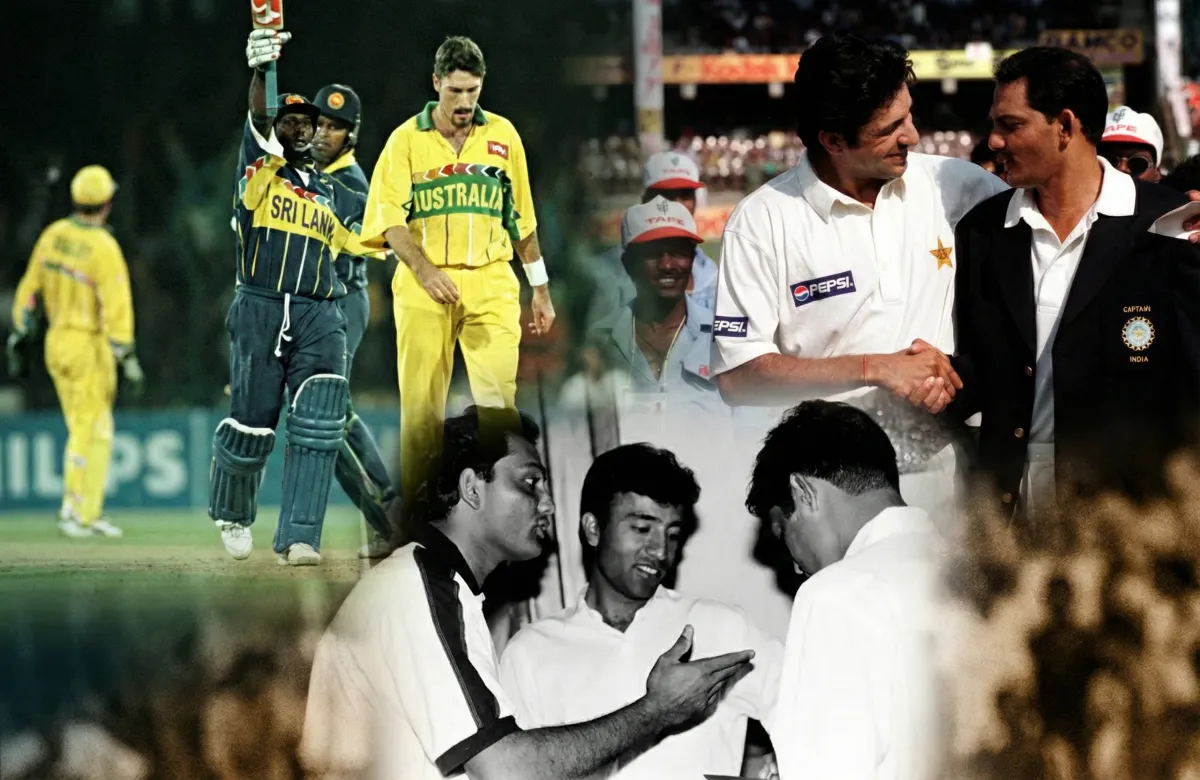
The answer was bold. India and Pakistan would form a joint side called Wills’ XI and play Sri Lanka in an exhibition match in Colombo. The message was simple: it’s safe to play here.
For fans, the visuals were almost comical.
Tendulkar chatting tactics with Akram.
Kumble possibly asking Waqar about reverse swing instead of trying to decode it from 22 yards away.
Players who normally tried to dismantle each other were suddenly teammates. One dressing room. One cause.
It felt less like a bilateral rivalry and more like cricket’s version of a superhero crossover episode.
The Match Itself
Played at the Sinhalese Sports Club Ground, the game was competitive but the result barely mattered. Sri Lanka held their own. The crowd turned up in force.
What truly mattered was what the match represented. International players had come. The stadium was full. The world was watching.
Sri Lanka could host safely.
Within weeks, the World Cup moved ahead without Sri Lanka being sidelined. By April, Arjuna Ranatunga’s side had done more than just host they had won the tournament.
From uncertainty to champions in a matter of weeks.
Why It Still Matters
Thirty years later, India-Pakistan cricket remains complicated. Bilateral series are rare. Political tension lingers. Which makes that February evening in 1996 even more remarkable.
For a few hours, rivalry paused. The bigger picture took priority.
No one remembers the exact scorecard without Googling it. What people remember is the image. Two nations often divided, walking out together because the game needed them to.
Some matches are famous for centuries and five-wicket hauls.
This one is remembered because cricket, just for a day, decided to grow up.