To the uninitiated eye, cricket can look less like a sport and more like a mysterious ritual performed in white trousers or brightly colored kits. Matches can last anywhere from three hours to five days. There are breaks for lunch and tea. And the commentators speak a language completely their own, tossing around phrases like "silly mid-off," "googly," and "LBW" with casual enthusiasm.
If you have ever flipped the channel to a cricket match and felt completely lost, take a deep breath. You are not alone.
Despite its reputation for mind-bending complexity, the beating heart of cricket is actually incredibly simple. It is a bat-and-ball game. One team tries to score as many runs as possible, while the other team tries to stop them and get them out. That is the fundamental truth of the sport. Everything else is just glorious, dramatic detail.
As a sports journalist who has spent years analyzing this beautiful game, I am here to demystify it for you. Welcome to Cricket 101. Let’s break down the rules of the game so you can finally enjoy the action.
The Ultimate Objective: Runs and Wickets
Let’s start with the basics. A game of cricket is played between two teams, each consisting of 11 players.
The match is divided into phases called innings. During an innings, one team bats (the batting side) and the other team fields and bowls (the fielding side).
- The Batting Team’s Goal: To score as many runs as possible without getting out.
- The Fielding Team’s Goal: To restrict the scoring and dismiss the batters (take "wickets").
Once the batting team is either entirely dismissed or their allotted time/deliveries run out, the teams swap roles. The team that scores the most runs by the end of the match wins. It really is that straightforward.
The Arena and The Equipment
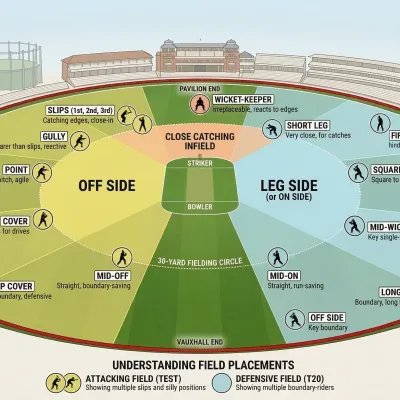
Before we set the rules in motion, you need to understand the stage. Cricket is played on a large oval grass field. In the dead center of this field is the most important piece of real estate in the sport: the pitch.
The pitch is a 22-yard-long rectangular strip of rolled, manicured clay and grass. At each end of the pitch, there is a set of stumps—three wooden wooden stakes driven into the ground, topped with two small wooden pieces called bails. The whole wooden structure is collectively known as the wicket.
White lines are painted on the pitch just in front of the wickets. These are called the creases. They act as safe zones for the batters, much like bases in baseball.
As for the equipment, the batter wields a flat-faced wooden bat (traditionally made of English willow), while the bowler hurls a hard, leather-stitched ball that is similar in size to a baseball but slightly heavier and harder.
The Core Mechanics: How the Game Flows
When the umpire calls "Play," 13 people take the field: two umpires, 11 fielders, and just two batters.
Wait, two batters? Yes. Unlike baseball, cricket batters work in pairs. One stands at the "striker's end" to hit the ball, while their partner stands at the "non-striker's end," waiting to run.
The fielding team selects a bowler. The bowler’s job is to run up and propel the ball toward the batter at the striker's end, bouncing it on the pitch. The bowler must bowl the ball with a straight arm—throwing or "chucking" is strictly forbidden.
The bowler delivers the ball six times. This sequence of six legal deliveries is called an over. After an over is completed, a different bowler takes over from the opposite end of the pitch.
How to Score Runs
The batting team is trying to accumulate a massive total. There are two primary ways to make the scoreboard tick over:
1. Running Between the Wickets
When the bowler delivers the ball, the batter tries to hit it into a gap in the field. If they make solid contact, both the striker and the non-striker can decide to run to the opposite end of the pitch. If they both safely ground their bats behind the crease at the other end before the fielding team can throw the ball back to the stumps, they score one run.
If they hit it into a large gap, they might turn around and run back for a second, third, or even fourth run.
2. Hitting Boundaries
If you want to score quickly without exhausting yourself, you hit boundaries.
- A Four: If the batter hits the ball and it bounces across the grass before crossing the boundary rope at the edge of the field, it is an automatic four runs. No running required.
- A Six: The ultimate crowd-pleaser. If the batter smashes the ball and it flies entirely over the boundary rope without bouncing—much like a home run—it is worth a massive six runs.
3. Extras
The fielding team can also accidentally give away free runs, known as "extras." This happens if the bowler bowls an illegal delivery. If the ball is bowled too wide for the batter to reach, it is called a Wide. If the bowler oversteps the crease during their delivery stride, it is a No-Ball. Both result in a free run for the batting side and force the bowler to bowl that delivery again.
How to Get Out (Dismissals)
While the batters are trying to score, the bowler and the fielders are desperately trying to dismiss them. When a batter is gotten out, they must leave the field and are replaced by the next player in the batting lineup. Once 10 of the 11 batters are out, the innings is over (since you need two batters on the field to continue).
There are 10 ways to get out in cricket, but as a beginner, you only need to understand the "Big Five":
1. Bowled
This is the most satisfying dismissal for a bowler. They bowl the ball, it beats the batter's defense, crashes into the stumps, and knocks the bails off. The batter is instantly out.
2. Caught
Just like in baseball, if the batter hits the ball into the air and a fielder catches it before it touches the ground, the batter is out. This is the most common form of dismissal in the game.
3. LBW (Leg Before Wicket)
This is the rule that confuses beginners the most, but the logic is sound. A batter cannot use their legs or body to protect the stumps. If the bowler bowls a ball that strikes the batter’s leg pads, and the umpire believes that the ball would have gone on to hit the stumps if the leg wasn't in the way, the batter is given out LBW.
4. Run Out
When the batters are attempting to run between the wickets, they are vulnerable. If a fielder collects the ball and throws it to knock the bails off the stumps before the running batter crosses the safety line (the crease), the batter is run out.
5. Stumped
This requires lightning-fast reflexes from the wicketkeeper (the fielder wearing gloves behind the stumps). If the batter steps completely outside their crease to try and hit the ball but misses, the wicketkeeper can catch the ball and immediately whip the bails off. If the batter hasn't scrambled back behind the line in time, they are stumped.
The Three Formats of the Game
Now that you know the mechanics, how long does a game actually last? That depends on the format. Cricket has evolved to offer three distinct flavors to suit different audiences:
- Test Cricket: The oldest and most traditional format. Played over five grueling days, both teams get to bat twice. They wear traditional white clothing and use a red ball. It is an ultimate test of endurance, technique, and mental fortitude.
- One Day Internationals (ODIs): A faster-paced format played in a single day. Each team gets 50 overs (300 balls) to score as many runs as possible. They wear colored kits and use a white ball.
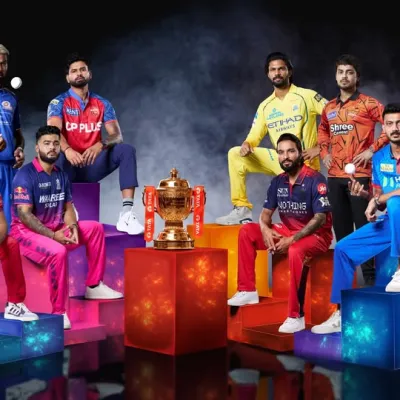
- Twenty20 (T20): The modern blockbuster format. Each team gets just 20 overs (120 balls). Matches last about three hours, feature music, cheerleaders, and aggressive, high-risk batting. It is fast, furious, and highly entertaining.
Why We Love It
Cricket is a game of magnificent contradictions. It is a team sport, yet its defining moments boil down to a deeply personal, one-on-one duel between a bowler and a batter. It requires brute strength to hit a six, but delicate, almost balletic footwork to survive a spinning ball. It is a game where the condition of a piece of leather, the dampness of the grass, and the direction of the wind can completely alter a team's destiny.
The rules may seem like a barrier to entry, but once you grasp these fundamentals, the barrier lifts. You start seeing the tactical chess match unfolding beneath the surface. You appreciate the tension of a maiden over (six balls with no runs scored) and the explosive release of a perfectly timed cover drive.
So, the next time you see a match on TV, don't change the channel. Watch the bowler run in. Watch the batter take their stance. You know the rules now. You are ready for the drama.