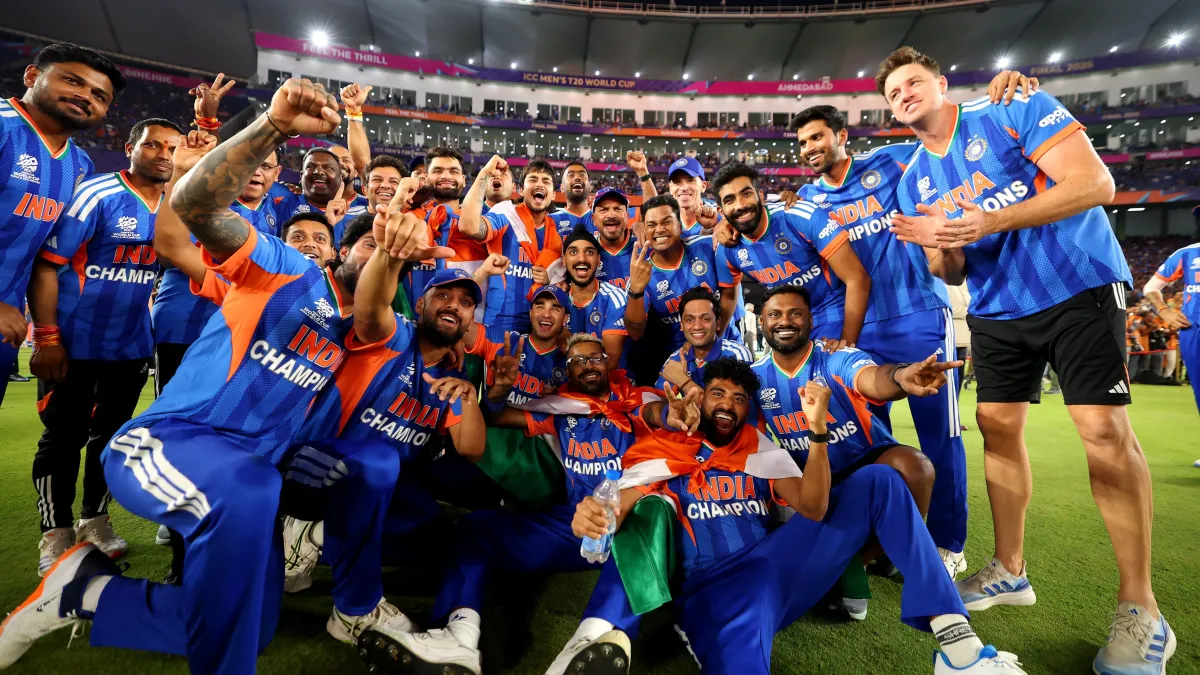
The dust has finally settled at the Narendra Modi Stadium, and if you listen closely, you can still hear the rhythmic roar of 86,000 voices chanting in unison. The 2026 ICC Men’s T20 World Cup didn’t just end on Sunday; it culminated in a shift of the cricketing cosmos. By defeating New Zealand by 96 runs in a clinical final, India has done what no team in the history of the format has ever achieved: they defended their title, claimed a record third trophy, and did it all on the hallowed turf of their own backyard.
But beyond the cold, hard statistics of a 255-run total and a 96-run victory margin lies a human story of redemption, relentless evolution, and the pure, unadulterated joy of a sport that continues to capture hearts from Colombo to Ahmedabad.
A Final That Rewrote the Record Books
The finale was billed as a clash between India’s explosive batting and New Zealand’s tactical discipline. Instead, it became a showcase of the "New India" brand of T20 cricket—one that doesn't just win but dominates.
- The Samson Masterclass: Sanju Samson, often the subject of debate regarding his consistency, silenced every critic with a breathtaking 89 off 46 balls. It was the highest individual score ever in a T20 World Cup final, a knock defined by effortless timing and a sense of calm that anchored the entire innings.
- The Young Guns: Abhishek Sharma (52 off 18) and Ishan Kishan (54 off 25) provided the early lightning, ensuring the powerplay was a blur of boundaries. Their fearlessness is the hallmark of a generation that grew up in the IPL era, knowing no fear of the big stage.
- The Finishing Kick: Shivam Dube’s late cameo, including a 24-run demolition of the final over, pushed India to 255/5. It was a total that felt less like a target and more like a mountain for the Kiwis to climb.
The Heartbeat of the Co-Hosts
While the final belonged to Ahmedabad, the soul of this tournament was shared with Sri Lanka. The co-hosting arrangement brought a unique flavor to the proceedings. We saw the passion of the fans at the R. Premadasa Stadium and the picturesque Pallekele, proving that the heartbeat of cricket in South Asia is stronger than ever.
Unforgettable Moments of the Tournament
The 2026 edition was a month-long highlight reel that reminded us why we love this game:
- The Rise of the Underdogs: Zimbabwe’s stunning 23-run upset over Australia in the group stages was a testament to the narrowing gap between the "Big Three" and the rest of the world.
- Individual Brilliance: Finn Allen’s 33-ball century in the semi-final against South Africa was a display of raw power that briefly made New Zealand look invincible.
- The Italian Debut: Seeing Italy compete in their first-ever T20 World Cup added a touch of romanticism to the event, proving that the "World" in World Cup is becoming more inclusive every four years.
- The Samra Sensation: Canadian teenager Yuvraj Samra became the youngest player to score a century in a World Cup, a 110-run masterpiece that announced the arrival of a future superstar.
More Than Just a Game
As Suryakumar Yadav hoisted the trophy into the Ahmedabad night, the victory felt like more than just a sporting achievement. For India, it was about exorcising the ghosts of the 2023 ODI World Cup loss at this very venue. For the fans, it was a month of shared tension, late-night celebrations, and the kind of communal experience only a World Cup can provide.
The Statistical Legacy
The numbers from 2026 will be studied by analysts for years, but a few stand out as pillars of this era:
- Sanju Samson: Player of the Tournament and record-holder for most sixes in a single edition (24).
- Jasprit Bumrah & Varun Chakravarthy: The joint-leading wicket-takers with 14 scalps each, proving that even in a batter’s game, elite bowling remains the ultimate currency.
- Sahibzada Farhan: The leading run-scorer (383 runs), who carried Pakistan’s hopes with remarkable poise despite their early exit.
Looking Toward the Horizon
The 2026 T20 World Cup has set a new benchmark for what the shortest format can be. It was faster, louder, and more high-scoring than anything we’ve seen before. India’s era of dominance is officially here, but the hunger shown by teams like New Zealand, Afghanistan, and the emerging nations suggests that the crown will be harder to keep than ever.
As the fans stream out of the stadium and the lights of Ahmedabad dim, the conversation has already shifted. We aren't just talking about who won; we’re talking about how the game has changed forever.